


What To Do If A Branch Is On A Power Line

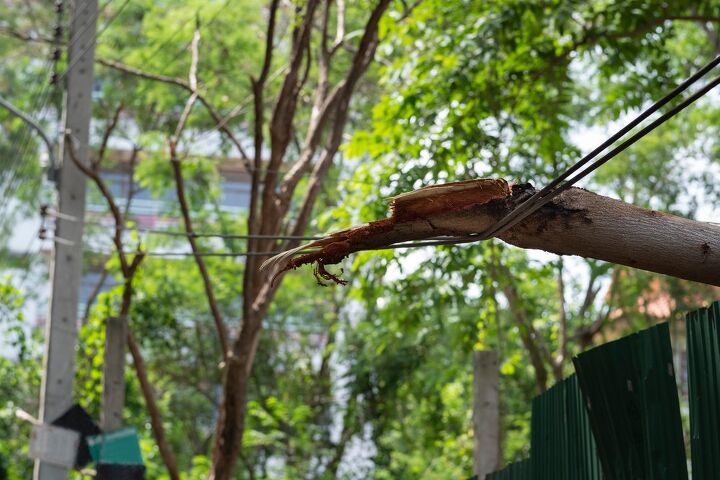
No homeowner wants to look outside and see a branch or tree on their power lines. Most people are aware of the extreme danger that comes along with this, so it can be scary. That’s why you may understandably wonder what to do if a branch is on a power line.
If a branch is on a power line, you must contact your power provider right away and describe the location. However, it’s best to immediately call 911 if you notice sparks, as that indicates a severe fire risk. Stay at least 35-100 feet away from the power line and wait until emergency services and the power company arrive.
Touching a branch on a power line can be fatal, so it isn’t worth the risk. Feel free to call the power company if you see sketchy branches that seem too close to power lines, and they may remove them. Follow along as we explore what to do if a branch is on a power line.
Is It Safe To Remove A Branch From A Power Line?
You should never remove a branch from a power line, as it’s unsafe and can even cause death. Some people mistakenly think it’s safe to do so because they don’t see any sparks. However, the absence of sparks can be misleading, as the wire may still be live.
High-voltage electricity can cause devastating injuries, such as severe burns and nerve damage. You can even go into cardiac arrest, which is fatal and not worth risking. Electrical shocks can also cause severe muscle contractions, paralysis, and seizures.
Many people fall from great heights when shocked, as power lines typically stand 30 to 60 feet high. Think twice before attempting to remove a branch from a power line at home.
What To Do If A Tree Falls On A Power Line
The last thing you should do is panic when a tree or branch falls on a power line. However, you should take it seriously, as there’s a good chance there are some exposed wires. Take the following steps to avoid suffering a devastating electrical shock:
1. Keep Your Distance
The first thing you should do is get far away from the power line when you notice a downed tree or branch. That’s especially true if it’s raining outside or the ground is wet for any reason. Electricity can arc through objects like trees, branches, and nearby metal objects.
Water amplifies this and makes the situation more dangerous. Not only can you get shocked, but exposed wires also pose a big fire risk that isn’t worth the exposure. Keep your distance and stay at least 35 to 100 feet away from the damaged power line.
Ideally, you, your pets, and your family must stay inside to avoid exposure. Keep in mind that the damaged power line may be in contact with nearby metal objects. Because of that, you must centralize yourself in your home and avoid touching indoor metal objects closest to the power line.
2. Call Your Utility Service
Next, you must call your electrical service provider to let them know about the tree or branch. Carefully describe the location of the downed branch, so it’s easier for the utility company to remove. They must know the exact location to adequately prepare and protect themselves.
Electrical companies train their employees to carefully prune branches without touching wires. Of course, they must also shut the power off, which can temporarily affect you and your neighbors. Electrical companies are supposed to regularly inspect and prune trees near power lines as needed.
Doing so can prevent such emergencies from happening in the first place. However, that doesn’t always happen, and some trees are mistakenly underestimated as threats.
3. Call Emergency Services
In some cases, it’s best to call 911 if you believe you’re in immediate danger. That’s especially true if you see sparks and worry about the risk of fire. The dispatcher may direct you to call your utility company, but you must be adamant if you see sparks.
Regardless, emergency services must work in conjunction with the utility provider to fix the situation. It may even be worth calling 911 and then promptly calling your utility provider as well. However, it’s a good idea to simply call the electrical company if you don’t see sparks. Use your best judgment.
4. Keep An Eye Out
Once the branch is removed, you can go about your day as usual. Going forward, you must keep an eye on the trees in your yard, especially the ones closest to power lines. Power companies don’t always do a great job of monitoring local trees near power lines.
That’s especially true in densely populated areas with many homes and dense tree lines. Unfortunately, that means you must pay attention and look out for problematic branches that seem like they may fall. It’s better to be safe than sorry, so don’t hesitate to call about a sketchy branch long before it falls.
Who Is Responsible For Trimming Branches Around Power Lines?
Power companies are responsible for trimming branches around power lines. Some people mistakenly hesitate to contact power companies because they fear expensive branch removal costs. However, you don’t have to pay the power company to remove a tree branch that is on a power line.
Power companies are supposed to ensure the area around their power lines is safe. This gives homeowners and renters alike an easy out to avoid incurring exorbitant costs. That’s why it’s better to call the power company than a tree removal service when you see a branch on a power line.
Look into your local power provider’s maintenance policies. Power companies typically encourage customers to call if they see a concerning tree. The last thing you want to do is call them when it’s too late, as that carries the risk of fire and electrical shock.
What Should I Do If My Neighbor’s Tree Falls On My Power Line?
Follow the same steps listed above and call the local power company if your neighbor’s tree falls on your power line. Report the situation right away and call or text your neighbor if possible to help protect them as well. For example, your neighbor may be gone and doesn’t realize they’re returning to a home with a downed tree and exposed power line.
You are even less responsible for the power line and tree than if it was your tree that fell. However, your neighbor may have to cover the costs if the power company or insurance company reveals it was their fault. This can happen if your neighbor’s actions damaged and weakened the tree enough for it to fall.
Negligence is another factor that often leads insurance providers to blame homeowners. Even still, your neighbor must cover the costs, so you don’t have to worry about that.
Summing It Up
Never touch a branch that has fallen on your power line and stay away from the power line to avoid electrical shock. Call 911 if you see sparks and suspect the risk of fire. Otherwise, you must stay inside, contact the power company, and let them carefully remove the branch.
Related Guides:
Nick Durante is a professional writer with a primary focus on home improvement. When he is not writing about home improvement or taking on projects around the house, he likes to read and create art. He is always looking towards the newest trends in home improvement.
More by Nick Durante














![10 Most Dangerous Neighborhoods in Baltimore [Updated]](https://cdn-fastly.upgradedhome.com/media/2023/07/31/9075655/10-most-dangerous-neighborhoods-in-baltimore-updated.jpg?size=350x220)